Friday, November 30, 2012

Myanmar Seed Exchange


During the recent 2012 ECHO Myanmar Agriculture Workshop in Yangon, a seed exchange was held with representatives from nine Myanmar organizations bringing plant materials for 38 crop varieties.  

Crop seeds, cuttings and seedlings brought for exchange included green mung, peanut, grain sorghum, corn, pigeon pea, pearl millet, Hesperethusa crenulata (tanaka), millet, Straculia versicolor, sugar pea, mustard greens, cassod tree, wax gourd, okra, bitter eggplant, taro, black mung, broad bean, cowpea, bottle gourd, passion fruit, yard long bean, dill, radish, pumpkin, cucumber, roselle, lettuce, sweet onion, coriander, kidney bean, bush okra, euphorbia, ginger, lentils, black bean, chaya and Napier grass.

The goals of the seed exchange included:
  • Introducing and/or reinforcing the concept of seed saving and sharing to strengthening crop diversity and food security beginning at household and community level.
  • Highlighting Myanmar’s crop diversity across a variety of ecological zones including the Irrawaddy Delta, the Dry Zone as well as diverse upland region.
  • Encouraging networking and exchange among the participating agricultural development agencies


Thursday, November 29, 2012

Workshop in Myanmar


The 2012 ECHO Myanmar Agriculture workshop was held in Yangon during Oct. 30-Nov. 2.  With 66 registrants, over 25 Myanmar-based organizations were represented, making this the largest ECHO Asia event offered outside of Chiang Mai thus far.  


Topics and activities included Agricultural Responses to Climate Change, Biochar, Natural Farming and Alternative Fuels/Stoves as well as four post-workshop tour options around Yangon.  

Many thanks to the Myanmar Baptist Convention’s CSSDD team for co-hosting this event. 

Friday, September 28, 2012

ECHO East Africa Meets ECHO Southeast Asia

The ECHO Asia Regional Office was honored to host Erwin Kinsey, Director of ECHO's East Africa Regional Impact Center, for a week-long exchange visit. 

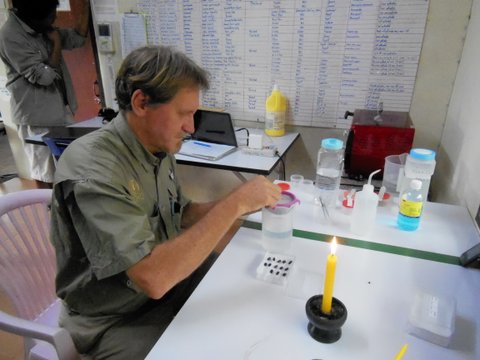
In addition to sharing ideas about key RIC activities, such as technical response and regional /country workshops and other training events, Erwin spent two days at the ECHO Asia Seed Bank for exposure to operations there.  Additionally, ideas regarding RIC cooperation in research and training were discussed.  Here, Erwin is pictured participating in a seed germination check at the seed bank.


Thursday, September 27, 2012

Caveman Club Gourd


During a seed fair in Thailand's Chiang Rai province in 2011, the ECHO Asia Seed Bank came across a number of interesting crops grown by hilltribe farmers.  But it was not until the current 2012 growing season that one of these crops caught our full attention.  Although we knew gourd seeds had been obtained at the fair, we had no idea that they were seeds from the unique Caveman Club gourd.   

In fact, this was the first time that we had come across this particular variety.  Obviously, the crop can be grown for novelty or ornamental purposes.  When mature, the gourd will turn brown while retaining its characteristic texture.  And like our other common gourd varieties, both the young fruit and shoots are edible.  

FYI, seeds are currently being prepared for distribution.

Tuesday, August 14, 2012

Micro-Hydro for the Global Farm

During a visit in May by ECHO's President/CEO, Stan Doerr, he requested that we purchase a few micro-hydro generators from a shop in Chiang Mai to demonstrate at ECHO's Global Farm as well as to take to ECHO's East Africa Impact Center in Arusha, Tanzania.  The shop sells various sizes of units with the capacity to generate electricity of 600 watts and higher.  I bought three of the 1 kw units.
One type of generator has a three-inch intake pipe to accommodate an adequate volume of water (5-8 liters/second) with a minimum drop of 5 meters required to spin the turbine. The second type of unit has a shaft with a rotor extending from the turbine.  These units are designed to be installed in penstocks in which water drops vertically between 6-10 ft. (1.8 m – 3.1 m); the required degree of drop will depend on the generating capacity of each turbine.  To accomplish this, an adequate flow of water must be directed via a channel into a properly designed penstock in which a vortex is created that will cause the rotor to spin.
In June we hauled all three generators to the ECHO Global Farm in Ft. Myers, Florida.  Upon arrival, ECHO's Appropriate Technology Intern, Craig Bielema, worked many hours to set up one of the generators in a suitable location for demonstration.

An ECHO Asia document called "Micro-Hydro in Myanmar and Thailand" that introduces the concept of such practical technology can be downloaded as a PDF from this site: http://www.echocommunity.org/resource/collection/F6FFA3BF-02EF-4FE3-B180-F391C063E31A/Micro-Hydro_in_Myanmar_and_Thailand.pdf

Monday, August 6, 2012

Crops from Chiang Mai Off to a Great Start in Fort Myers

Tim, Andy and Marcie with the white thorn rattan seedlings
ECHO, International is located at the ECHO Global Farm in Ft. Myers, Florida. This 50-acre farm demonstrates practical ideas for growing food under difficult conditions in tropical climates to over 14,000 guests each year.  Many of the visitors are agricultural and community development workers serving the poor worldwide.

Vegetable taro seedlings
Hundreds of different crops are grown at ECHO's Global Farm, including tropical fruit trees, grains, oil crops and vegetables; many of which are underutilized and/or challenging to locate.

In May, ECHO intern, Kimberly Duncan, and I prepared a shipment of unique Asian crops for the Global Farm.  A box full of propagatable plant materials (cuttings and bulbs) of vegetable fern (Diplazium esculentum), vegetable taro (Colocasia esculenta), snowflake tree (Trevesia palmata) and leaf pepper (Piper sarmentosum) as well as seeds of Job's tears (Coix lacryma-jobi) was sent from Chiang Mai to Ft. Myers via express mail.  Of course, the plant materials were inspected and certified by phytosanitary officials both in Chiang Mai and Miami.
Ellen with vegetable fern, snowflake tree and leaf pepper seedlings
Visiting the Global Farm in July and anxious to see how the recently arrived plants were faring, I was delighted to find that each crop had not only survived the trip, but had been expertly "stuck" and/or planted by the Global Farm staff.  Healthy white thorn rattan seedlings (Calamus viminalis) growing from seed that we sent from Chiang Mai two year ago were also growing in the nursery.

Hopefully, these crops will continue to thrive at the Global Farm, serving not only as teaching tools but sources of nutrition there as well.
Job's tears seedlings ready to be transplanted into one of the field plots

Tuesday, July 3, 2012

Breathing the Air of Self-Reliance by Kimberly Duncan, ECHO Asia Intern


In the interest of continued development and improving our service to our network partners, the staff, volunteers, and interns of ECHO Asia’s Seed Bank recently took a field trip to visit the organic farming community in Mae Tha, Thailand, about 5 hours south of our Seed Bank facility in Fang, and about an hour southwest of ECHO Asia’s Office in Chiang Mai.  Thirty years ago, under the leadership of Khun Por Phat, this community began questioning the sweeping trends of large-scale, chemical vegetable production and, forming a cooperative, started concentrating its efforts on growing food in ways that it felt would best nourish its people, preserve the environment, and leave a heritage for its future generations.

The lush green and the lightness of the air were the first impressions to greet our travel-weary group upon arrival.  Thereafter, it seemed that each member found something fascinating and relevant to his or her own focus transplanted from our daily jobs to this determinedly chemical-free community.

 “The companion planting!” exclaimed our Production Manager, Leu, eagerly.   (He and another ECHO Asia intern, Jen, have been working closely on the issue of pest management in our own seed production plots.)  “Pumpkins, chilies, bottle gourd and beans being grown and trellised together!  “Oh and see the basil with the eggplant!”  “And the flowers!  Kimberly, did you see the flowers they were growing around the plots to attract beneficial insects?”

“Yes! Biodiversity seemed key,” agreed Jen, after the visit  “Their emphasis on indigenous vegetable varieties and their care of the soil appeared absolutely critical to their ability to produce healthy plants and ones that will withstand the current changes in climate and environment.”

The raised, net-covered seedling nursery and seed-drying racks struck our technician, Asang.  Ongoing run-ins with pests of every kind in our nursery, not to mention fungus, have given him a run for his money. 

“Don’t forget Khun Por Phat’s charisma, though,” chimed in James (another intern).  “He’s the one that took the time to observe the growing patterns inherent in the natural world, think through the long-term effects of chemical inputs, and ultimately convince his neighbors and friends that organic farming practices and local plants were to be preferred to hybrids and heavy pesticides.  And remember the farmers who shared with us on our visits to their farms?!  What about that lady who has only been practicing organic farming for 3 years?  She understands what she is doing and why it works.  She didn’t just spout some ‘chemical free’ mantra, but was able to explain the differences she has seen in her farm, her vegetables, and her family’s health since she began.

All of our local staff was impressed with the long-rang planning of one farmer for his family.  Being the father of a single daughter, he has anticipated her and her mother’s needs down the road when he might not be around to support them any more by planting teak trees.  "In 20 years they’ll be large and valuable enough to sell for whatever they may need," he informed us.

Our big-picture lady, Ruth summarized our two days of visits and farmer interviews:  “It’s what we’re doing.  ECHO Asia’s approach is one of service to our network.  Mae Tha’s is doing ‘community development’ from within.

While we focused on the particulars most relevant to our individual work and family challenges at present, Khun Po Phat, in a sala over looking the agroforest he’s been nurturing for 25 years from the soil of a once barren hill, reflected on the sum total of what clean air, healthy soil, and strong plants actually add up to.  “Feel that breeze.  Isn’t it delicious?” he inquired stretching into it. “We’re free, we have everything we need, and we’re happy!”