Thursday, December 20, 2012

A Banana Multiplication Success Story

ECHO Asia technical advisor, Dr. Abram Bicksler, carrying out a similar banana  multiplication  test (results may vary according to banana varieties and locations).

At the 2011 ECHO Asia Conference we asked the delegates to share stories describing successful uses of ECHO's information and resources. The following is one in a series of posts containing these success stories.

ECHO's activities, from publications to conferences to seed distribution, all have one goal: getting resources into the hands of workers on the field so that we can indeed “honor God through sustainable hunger solutions.” For long-time members of the ECHO network all these disparate activities really seem unified. Buzz Maxey, of CAMA Services, shared a few comments with us, illustrating how he has utilized a number of different ECHO information and resources over the years:

“First, banana propagation gleaned from EDN [66]. A lot of my efforts and trials have been a fiasco but I was successful in this one: peel off 3 layers of the banana stalk, cut off the leaves, bend stalk over in [the shape of] a number 7. Drive a stake through the stalk at knee level, dig out a bit at the base of the plant, refill with compost, and in a few weeks many pups will sprout.

Second, chaya, moringa, papaya, loquat, and erethrina have all grown well. One farmer has sweet 
papaya—50 plants—at 5000 ft. elevation and his 75 head of cattle are eating chaya.

Third, I have attended four ECHO conferences and benefited every time. I have been blessed to be with people of like mind who are impacting the world's poor.” --Buzz Maxey, October 2011

Buzz Maxey was able to learn about banana multiplication from an EDN, receive samples of useful species from the ECHO seedbank, and share encouragement and information at four ECHO conferences. This is just one example of how ECHO's multiple activities serve the ultimate goal of serving the poor through sustainable agricultural solutions.

If you'd like more information about rapid banana multiplication see EDN 66, which Mr. Maxey referenced, and EDN 99, which demonstrates a slightly different technique. Both are available at ECHOcommunity.org.

Monday, December 3, 2012

Seed Production at Tung Kwang Tong Community

Much of the ECHO Asia Seed Bank's seed production takes place at our facility on the campus of the Upland Holistic Development Project in the Mae Ai District of Thailand's Chiang Mai Province.  However, a significant portion of the seed we distribute, including green manure/cover crops such as rice bean, jack bean and lablab bean, is grown by area farmers.

Tung Kwang Tong (Field of the Golden Deer) Community, also in Mae Ai, is predominantly ethnic Palaung.  Despite limited access to fields for rice and cash crop production, they tend impressive kitchen gardens.

ECHO Asia recently worked out an arrangement with community members to grow select crops, such as tomato and long bean, for the seed bank.  This arrangement provides supplemental income for the participating gardeners while improving the seed bank's access to more types of seed.  

Saturday, December 1, 2012

A Village Hike


In October, staff and volunteers from ECHO Asia accompanied students from the International Sustainable Development Studies Institute (ISDSI) on a hike between the Pang Daeng Nai, Mae Jawn and Huai Pong communities in Chiang Mai’s Chiang Dao district.  October was the perfect time to see the local production of green manure/cover crops, such as rice bean (Vigna umbellata) that is produced in a farming system known as relay cropping.  The rice bean was planted into a fully mature stand of corn around the end of August.  By the time the corn is harvested in September or October, a thick stand of beans has become established during the final weeks of the rainy season, forming an excellent soil-improving ground cover.  After the bean crop is harvested in January, farmers allow the decomposing corn and bean residues to remain in the field in order to supplement soil organic matter.

October was also a good time to see the mature upland rice fields.  Farmers in these communities often rotate production years of relay-cropped corn and legumes with upland rice production.  When the upland rice is planted, it is also grown with other rain-fed field crops such as grain sorghum, foxtail millet and pigeon pea as well as understory crops that include cucumber and pumpkin.

And interspersed between the hill fields are agroforest plots planted by local farmers in diverse mixtures of fruit trees, such as mango, and indigenous forest species, such as rattan (Calamus and Daemonorops species), black sugar palm (Arenga westerhoutii), fishtail palm (Caryota mitis), fan palm (Livistona speciosa), forest vine pepper (Piper interruptum) and snowflake tree (Trevesia palmata).  The farmers, such as Mr. Jawa in the Huai Pong Community, value the forest crops as they produce non-timber forest products that have become increasingly rare in the region due to the overharvest and forest degradation.  

Friday, November 30, 2012

Myanmar Seed Exchange


During the recent 2012 ECHO Myanmar Agriculture Workshop in Yangon, a seed exchange was held with representatives from nine Myanmar organizations bringing plant materials for 38 crop varieties.  

Crop seeds, cuttings and seedlings brought for exchange included green mung, peanut, grain sorghum, corn, pigeon pea, pearl millet, Hesperethusa crenulata (tanaka), millet, Straculia versicolor, sugar pea, mustard greens, cassod tree, wax gourd, okra, bitter eggplant, taro, black mung, broad bean, cowpea, bottle gourd, passion fruit, yard long bean, dill, radish, pumpkin, cucumber, roselle, lettuce, sweet onion, coriander, kidney bean, bush okra, euphorbia, ginger, lentils, black bean, chaya and Napier grass.

The goals of the seed exchange included:
  • Introducing and/or reinforcing the concept of seed saving and sharing to strengthening crop diversity and food security beginning at household and community level.
  • Highlighting Myanmar’s crop diversity across a variety of ecological zones including the Irrawaddy Delta, the Dry Zone as well as diverse upland region.
  • Encouraging networking and exchange among the participating agricultural development agencies


Thursday, November 29, 2012

Workshop in Myanmar


The 2012 ECHO Myanmar Agriculture workshop was held in Yangon during Oct. 30-Nov. 2.  With 66 registrants, over 25 Myanmar-based organizations were represented, making this the largest ECHO Asia event offered outside of Chiang Mai thus far.  


Topics and activities included Agricultural Responses to Climate Change, Biochar, Natural Farming and Alternative Fuels/Stoves as well as four post-workshop tour options around Yangon.  

Many thanks to the Myanmar Baptist Convention’s CSSDD team for co-hosting this event. 

Friday, September 28, 2012

ECHO East Africa Meets ECHO Southeast Asia

The ECHO Asia Regional Office was honored to host Erwin Kinsey, Director of ECHO's East Africa Regional Impact Center, for a week-long exchange visit. 

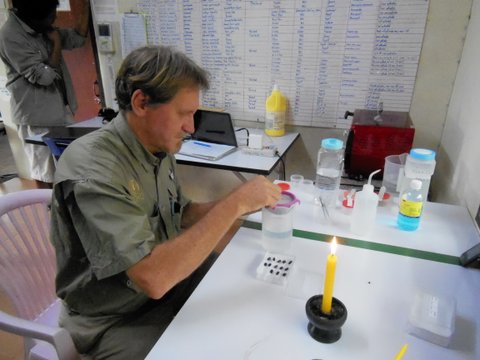
In addition to sharing ideas about key RIC activities, such as technical response and regional /country workshops and other training events, Erwin spent two days at the ECHO Asia Seed Bank for exposure to operations there.  Additionally, ideas regarding RIC cooperation in research and training were discussed.  Here, Erwin is pictured participating in a seed germination check at the seed bank.


Thursday, September 27, 2012

Caveman Club Gourd


During a seed fair in Thailand's Chiang Rai province in 2011, the ECHO Asia Seed Bank came across a number of interesting crops grown by hilltribe farmers.  But it was not until the current 2012 growing season that one of these crops caught our full attention.  Although we knew gourd seeds had been obtained at the fair, we had no idea that they were seeds from the unique Caveman Club gourd.   

In fact, this was the first time that we had come across this particular variety.  Obviously, the crop can be grown for novelty or ornamental purposes.  When mature, the gourd will turn brown while retaining its characteristic texture.  And like our other common gourd varieties, both the young fruit and shoots are edible.  

FYI, seeds are currently being prepared for distribution.